Make small steering corrections
How: tap A / D or the steering arrows briefly while moving, release, then judge your new direction. Brake before a tight change of direction rather than combining a long turn with boost.
Why and when: holding a turn in our test left the auto facing the median. Small corrections help when learning the camera and fitting through traffic; they do not make a blocked path safe.
Direct browser test
Identify the fatal vehicles first
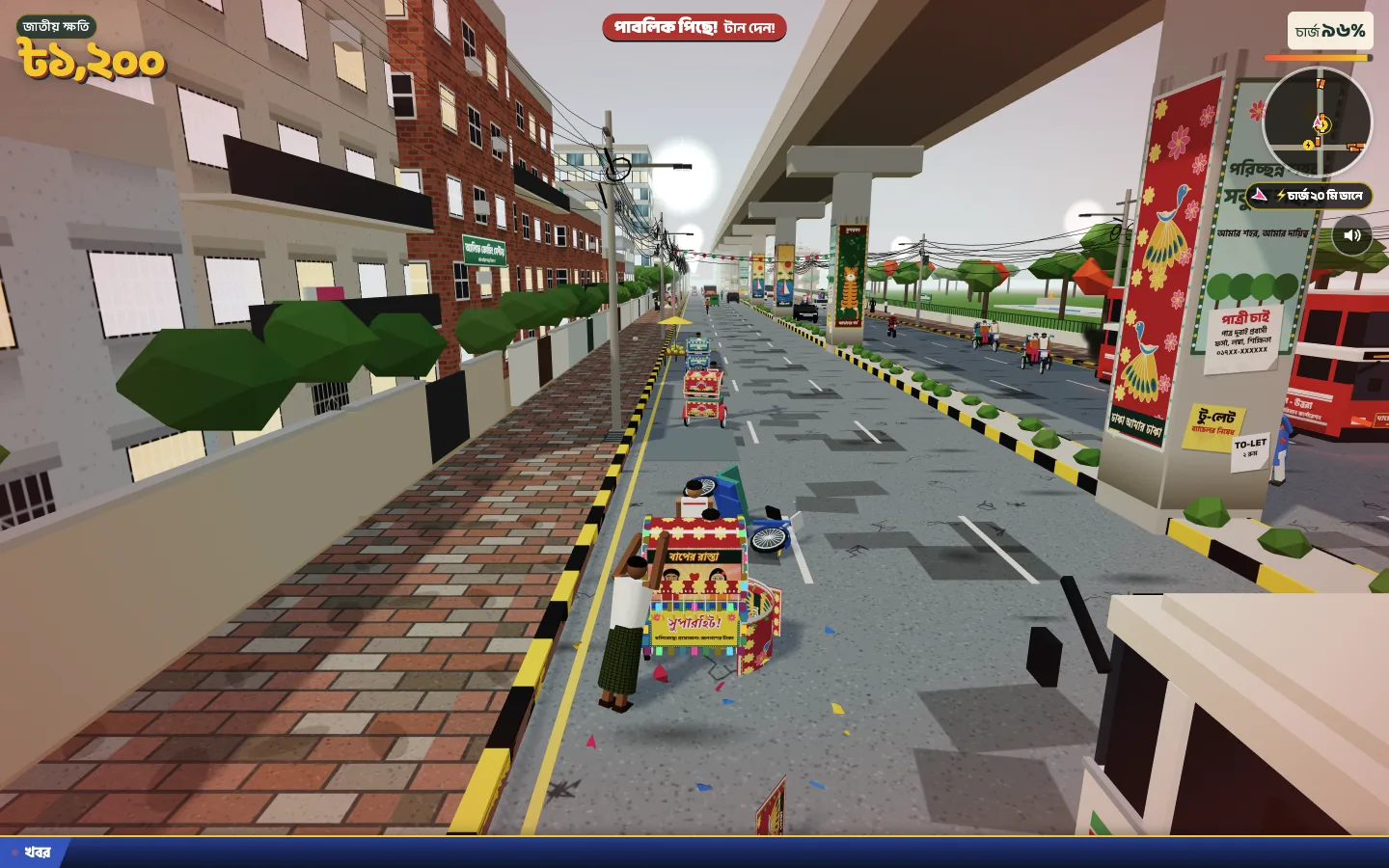
How: scan ahead for buses and trucks and the red glow underneath dangerous vehicles. Pick an open space before you commit to accelerating through a gap.
Why and when: the original distinguishes ordinary damage from a run-ending bus or truck collision. This matters after a small collision scores points: repeating the same move against a bus is not the same risk.
Boost with a way out
How: first point toward clear road, then use Shift or Space for a short boost. Let go before your next steering decision. Use ordinary acceleration while learning a new stretch.
Why and when: battery decreased during our boosted test, and the game explicitly says boost uses more charge. It is a trade-off when escaping pursuit or crossing open road, not a button to hold all the time.
Direct browser test
Notice charging markers early
How: glance at the battery and charging direction between traffic decisions. When you choose to recharge, slow down toward a yellow marking and confirm that the percentage increases. Keep pink police markings separate in your mind.
Why and when: rushing toward a marker can mean overshooting the place the original tells you to stop. A quiet approach is worth practicing before the battery becomes urgent. We have not measured a refill time or verified the full depleted-battery behaviour in play.
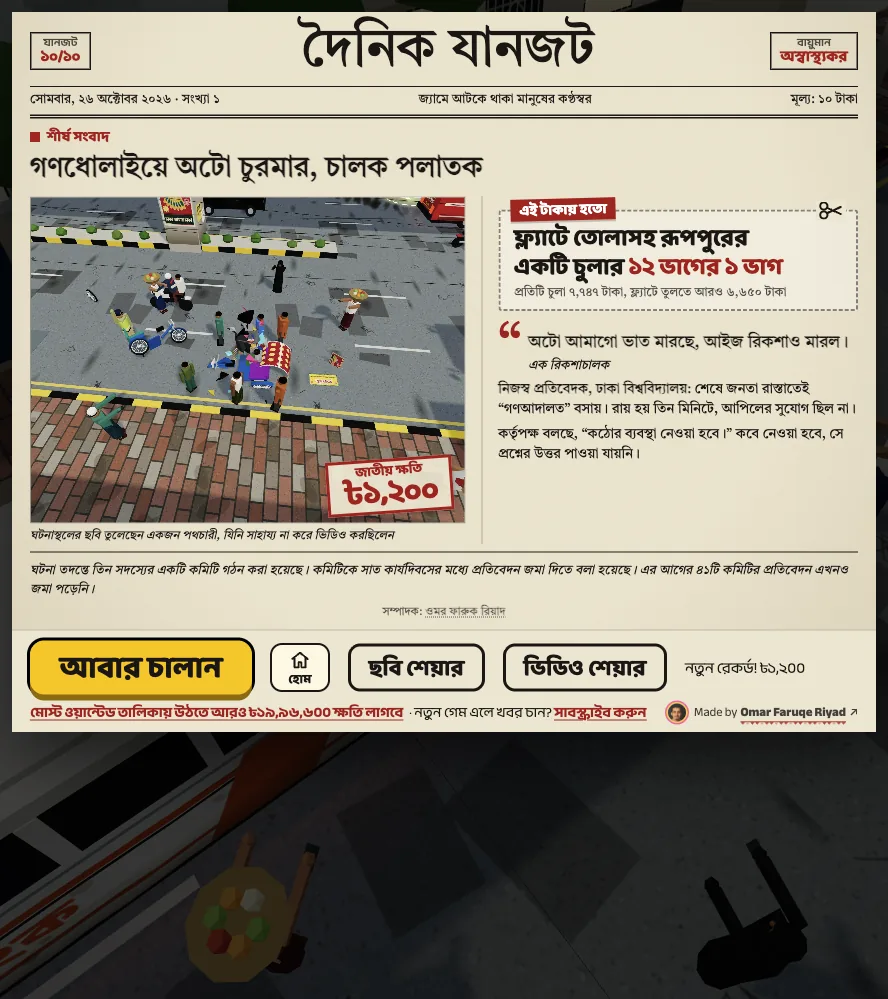
Use each ending as a practice note
How: after a run, note what ended it and choose one change for the next attempt. Try a run focused on steering, then one on spotting danger, then one on managing boost. Compare your decisions as well as the score.
Why and when: stopping after damage let pursuers catch us. Our newspaper-style result made that ending clear. Fixing that one habit is more useful at the beginning than chasing an unverified score target or assuming every crash is random.
A simple practice loop: start with ordinary acceleration and small turns; on the next attempt, watch for large vehicles earlier; on a later attempt, add brief boost only when the route is clear. If a run ends, record the visible cause and whether charge was low. Change one habit at a time so you can tell which decision helped. These are beginner drills, not a guaranteed high-score route.
Direct browser test